Tires are the only part of your car that touches the road. Every braking distance, every cornering maneuver, every wet-weather stop depends on four palm-sized contact patches — one per wheel. Choosing the wrong tire doesn't just cost money, it affects safety.
Understanding Tire Categories
All-Season Tires
The most common choice for Orange County drivers. All-season tires deliver adequate performance across a range of conditions — dry pavement, light rain, and occasional cold weather. They're rated for temperatures above 45°F (7°C), which covers the overwhelming majority of Southern California driving.
The trade-off: all-season tires don't excel in any single condition. They grip well enough in dry weather and handle moderate rain, but dedicated summer tires will outperform them in the 100°F heat of an August drive through Riverside.
Summer / Performance Tires
For drivers of sports cars, performance sedans, or anyone who values grip and response, summer tires are the correct choice in Southern California's climate. Their softer compound provides superior traction on dry and wet roads when temperatures are above 45°F. Below that threshold, the compound stiffens and traction drops off sharply.
Summer tires also wear faster in city driving — stop-and-go traffic accelerates compound degradation. Budget for replacement every 25,000–40,000 miles depending on the tire and driving style.
Winter / Snow Tires
Unnecessary for Orange County flatlands. If you drive to Big Bear or Mammoth regularly during winter months, a dedicated set of winter tires on a second set of wheels is worth the investment. The siping patterns and softer cold-weather compounds make a significant difference above 4,000 feet in January.
Reading the Sidewall: What Those Numbers Mean
A tire marked 225/50R17 breaks down as:
- 225: Width in millimeters
- 50: Aspect ratio (sidewall height as a percentage of width)
- R: Radial construction
- 17: Wheel diameter in inches
Always replace tires with the same size unless a certified technician recommends a different fitment. Incorrect sizing affects speedometer accuracy, ABS calibration, and handling balance.
Tread Depth: When to Replace
New tires start at around 10/32" of tread depth. California law requires replacement at 2/32" — but at that depth, wet-weather stopping distances are already dramatically increased. We recommend replacing at 4/32" for safety, especially during the fall rainy season when Orange County roads get their first wet of the year after months of dry.
The penny test is a rough guide: insert a penny into the tread groove with Lincoln's head down. If you can see the top of his head, you're below 2/32". Use a quarter instead for the more conservative 4/32" check — if you see the top of Washington's head, it's time.
Tire Service at Chapman Mobil in Orange, CA
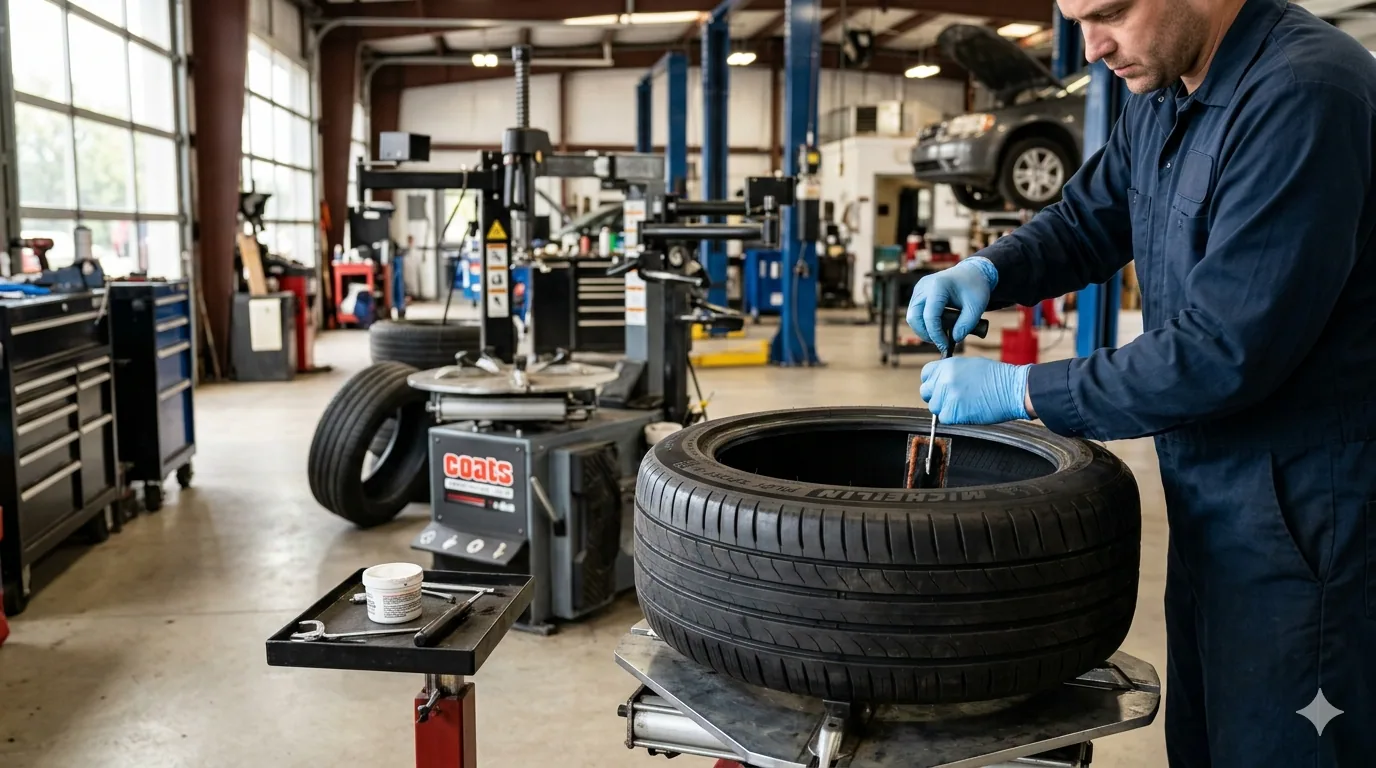
We supply and fit tires for all domestic and import vehicles. Every tire installation includes mounting, balancing, and a complimentary alignment check. We also perform nitrogen inflation on request. Our technicians will advise the correct tire for your vehicle, budget, and driving patterns — no upsell, no pressure. Call (949) 672-8954 to check current inventory and pricing.