Southern California's summers make a functioning AC system a necessity, not a luxury. When the temperature on Chapman Avenue hits 95°F in July, a car with a failing air conditioner becomes genuinely unpleasant — and potentially dangerous for vulnerable passengers. Here's how your AC system works, what can go wrong, and how to keep it performing through the heat.
How Your Car's AC System Works
Your vehicle's AC system is a closed refrigerant loop. A compressor (driven by the engine via a belt) pressurizes refrigerant, which flows to a condenser at the front of the vehicle where it releases heat. The refrigerant then passes through an expansion valve, drops in pressure and temperature, and runs through the evaporator inside the dashboard — absorbing heat from the cabin air blown across it. The cooled air circulates through the vents.
The system also dehumidifies the air as moisture condenses on the cold evaporator. That small puddle of water under your car on a hot day is normal — it's just condensate dripping.
Warning Signs of AC Problems
- Weak airflow: A clogged cabin air filter is the most common cause. Replacement is inexpensive and takes 10 minutes. If the filter is clean, the blower motor may be failing.
- Air blows but isn't cold: Usually indicates low refrigerant due to a leak, or a failing compressor. The system won't cool effectively below a certain refrigerant pressure threshold.
- Musty smell from vents: Mold or bacteria growing on the evaporator core — common in humid conditions. A cabin air filter replacement plus an evaporator treatment resolves this.
- AC only works at highway speeds: The condenser relies on airflow to reject heat. At low speeds, condenser fans take over. A failed condenser fan means the system only works when there's enough natural airflow — i.e., highway driving.
- Clicking or grinding from the compressor area: The compressor clutch may be slipping, or internal compressor wear has begun.
Refrigerant and Leaks
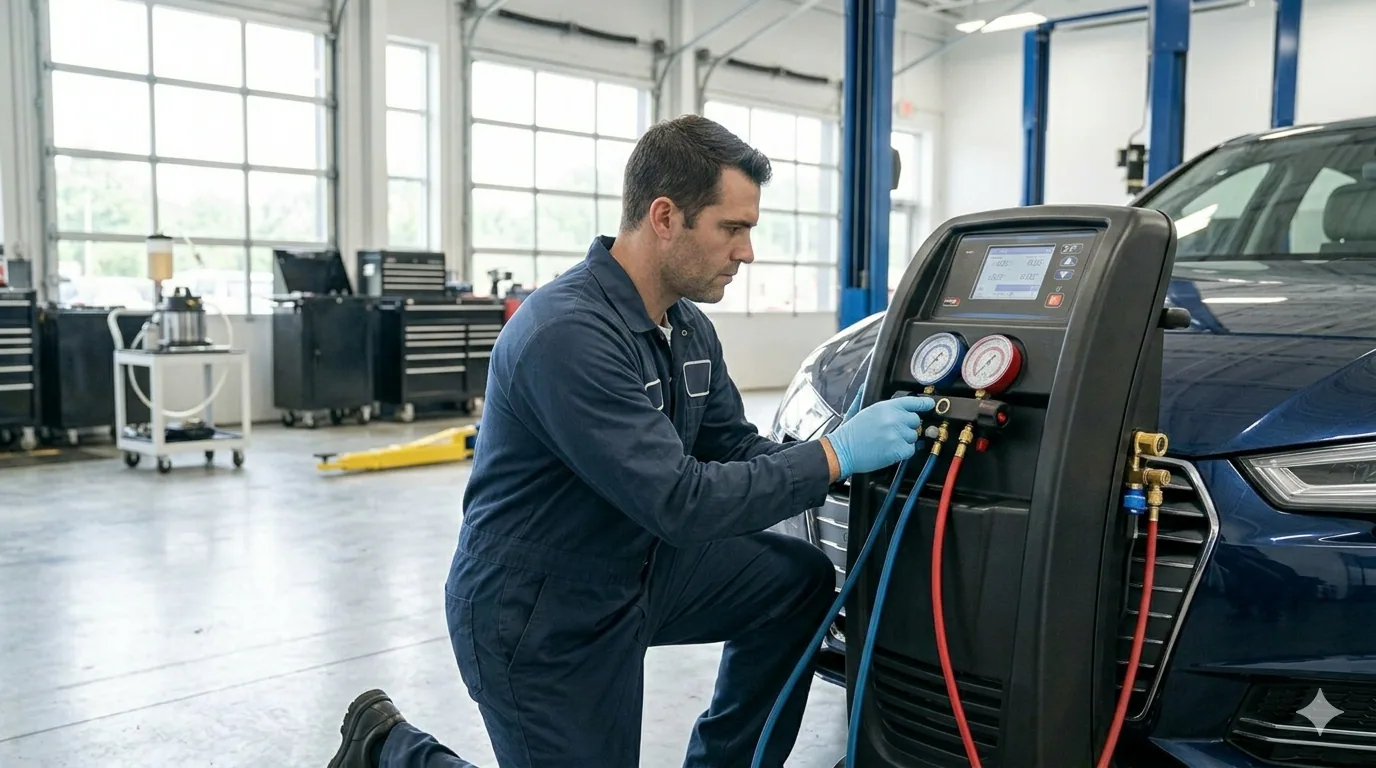
Modern vehicles use R-134a or R-1234yf refrigerant. Neither is consumed during normal operation — if your system is low on refrigerant, there's a leak somewhere. Simply "recharging" without finding and repairing the leak is a temporary fix at best.
Our technicians use UV dye and electronic leak detectors to pinpoint refrigerant leaks before recharging. Common leak locations include Schrader valves, hose connections, the condenser (especially after front-end impact), and evaporator cores on older vehicles.
Annual AC Maintenance for Orange County Summers
The best time to service your AC is spring — before the heat arrives. A proactive check costs far less than an emergency repair in August. We recommend:
- Cabin air filter replacement (annually or every 15,000 miles)
- Refrigerant pressure check (look for gradual pressure loss year over year)
- Compressor clutch inspection
- Condenser and evaporator visual check for damage and debris
Book your AC service at Chapman Mobil in Orange, CA before summer arrives. Call (949) 672-8954 or book online. We carry R-134a and R-1234yf refrigerant in stock.